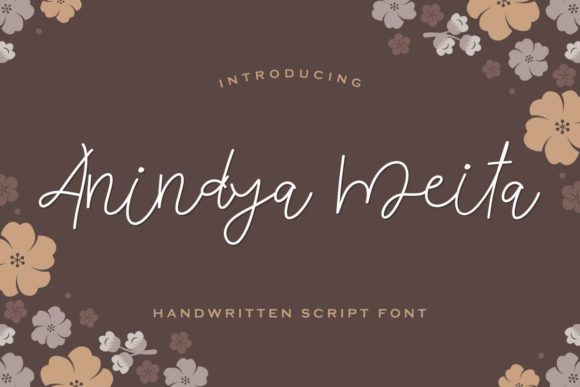
Anindya Meita: A Quirky Script Handwritten Font for Digital Branding
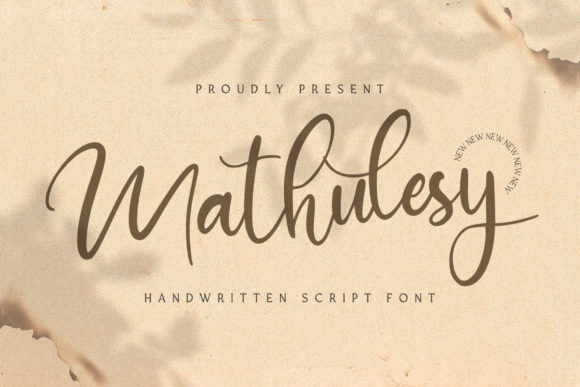
As a UI designer who ships high-conversion landing pages and branded web experiences daily, I reach for Anindya Meita when I need a Script Handwritten font that feels human, intentional, and unmistakably memorable — not just decorative. It’s not a generic brush script or overused calligraphy typeface. Anindya Meita balances irregular letterforms with consistent rhythm, giving it warmth without sacrificing legibility at scale. Its playful baseline shifts, subtle ink-like texture, and uneven stroke contrast make it ideal for digital interfaces where personality matters — especially when you’re building trust through tone before users scroll past your hero section.
Anindya Meita for Logo Design and Brand Identity Systems
Anindya Meita works exceptionally well as a primary logo font for creative studios, boutique services, and lifestyle brands — particularly when paired with a clean sans serif (like Inter or Manrope) for supporting text. Because it’s a Script Handwritten typeface with strong visual character, it instantly communicates approachability and craftsmanship. On websites, I use Anindya Meita for the logo lockup in the header, then echo its curves in custom SVG icons or hover animations to reinforce cohesion. For SaaS founders launching a personal brand or coaching practice, this Fonts choice signals authenticity without undermining professionalism — especially when rendered at 48–64px on desktop and carefully scaled down for mobile navigation bars.
Anindya Meita for Landing Page Headlines and Hero Sections
In conversion-focused layouts, Anindya Meita shines in hero headlines — but only when used intentionally. I reserve it for short, high-impact phrases: “Your First Session Is On Us”, “Handcrafted With Care”, or “Let’s Begin”. Its Script Handwritten nature adds emotional resonance that sterile sans serifs can’t replicate. However, I never use Anindya Meita for paragraph copy or body text. Instead, I pair it with a highly readable web-safe sans serif (e.g., Open Sans or Lato) for subheaders and CTAs. On light backgrounds, I apply a soft 1px text shadow for subtle depth; on dark or image overlays, I boost contrast with a crisp white fill and tight letter-spacing to maintain clarity at 32–40px sizes.
Anindya Meita for Business Cards and Digital Stationery Kits
When designing digital stationery kits for clients — think email signatures, PDF invoices, Notion templates, or Canva-brandable assets — Anindya Meita delivers instant visual distinction. As a Script Handwritten font, it elevates otherwise functional documents into branded touchpoints. I use it sparingly: for names on business cards, “Thank You” lines in invoice footers, or signature blocks in branded emails. Since many of these assets render across devices and email clients, I confirm that the Fonts package includes WOFF2 and TTF formats — and always embed via @font-face with fallbacks. For accessibility, I keep line height generous (1.6+) and avoid stacking multiple script fonts in one layout.
Anindya Meita for Greeting Cards and Social Media Graphics
Anindya Meita is my go-to Script Handwritten font for digital greeting cards, Instagram story highlights, and limited-run email banners — especially for wedding planners, florists, and indie gift shops. Its quirky charm reads as joyful, not childish, and scales cleanly from 24px captions to 96px celebratory headers. When exporting for social, I rasterize Anindya Meita text at 2x resolution to preserve its delicate terminals and ink-like flow. For animated stories, I pair it with subtle fade-in transitions and minimal background motion — letting the font’s personality drive attention, not compete with it. As with all Fonts, I verify commercial licensing covers social media distribution before final delivery.
Anindya Meita for Online Store Banners and Product Packaging Mockups
E-commerce designers know that banner typography makes or breaks first impressions. Anindya Meita performs beautifully in Shopify banners, product launch teasers, and packaging mockups — especially for artisanal, handmade, or slow-living brands. Its Script Handwritten quality suggests care and individuality, helping products stand out amid algorithm-driven feeds. I use it for short taglines (“Small Batch. Big Flavor.”) rather than feature lists, and always test readability on mobile: if letters blur or merge at 28px on iOS Safari, I reduce usage to headline-only or switch to a bolder weight if available. Most Fonts like Anindya Meita include stylistic alternates — I enable those via font-feature-settings in CSS to add variation without loading extra files.
Anindya Meita for Blog Headers and Editorial Web Design
For bloggers and content creators building editorial-style websites, Anindya Meita adds voice to article headers without overwhelming long-form reading. As a Script Handwritten display font, it works best at 36–52px for H2s and H3s — never H1s unless the site is portfolio-first. I pair it with a warm serif (like Playfair Display) for body copy to create tonal harmony: playful yet grounded, modern yet timeless. On dark-mode sites, I adjust the font color to #e0d6c9 instead of pure white to soften contrast and reduce eye strain. And because Fonts like Anindya Meita often lack full multilingual support, I double-check glyph coverage for client-facing projects targeting non-English audiences.
Anindya Meita for Portfolio Websites and Creative Freelancer Sites
If you’re a designer, illustrator, or photographer launching a portfolio, Anindya Meita helps your site feel like *you* — not a template. Its Script Handwritten style conveys artistry while remaining legible enough for contact forms and project titles. I use it consistently across three key spots: the site name in the header, “Work” or “Projects” section labels, and closing signatures in case studies. To ensure fast loading, I subset the font to only Latin characters and numerals — trimming file size by up to 60%. And since most Fonts licenses require explicit permission for client deliverables, I always purchase an extended license when handing off branded web assets to startups or agencies.